

Users, roles and permission resolution
Platform services
Platform KitIdentity, permissions and shared operating contracts
Platform Kit supplies the small shared core every module relies on: users, roles, permissions, settings, business context and stable platform contracts. It keeps independent modules coherent without absorbing their domain logic.
One of 40+ connected modulesSign-in, roles, licenses, menus and backupsOne database · one login · no re-typing
Why it matters
A business system is only as safe as its sign-in, roles and backups.
These platform services handle access, licenses, menus, notifications and verified backups for every module, so the business modules stay focused on the work.
What Platform Kit changesIdentity, permissions and shared operating contracts
Platform Kit supplies the small shared core every module relies on: users, roles, permissions, settings, business context and stable platform contracts. It keeps independent modules coherent without absorbing their domain logic.
What you get
Everything Platform Kit does, ready on day one.
Global settings and business context
Shared admin shell and navigation contracts
Module registry and activation state
Security and authentication foundations
Stable primitives for independent modules
How it works
Platform Kit, step by step.
Sign in securely
Staff sign in with two-factor authentication or passkeys.
Assign roles
Roles and permissions decide what each person can see and do.
Set up the business
Global settings hold your business details, currencies and languages.
Switch on modules
The module registry turns modules on or off without touching the core.
In the admin
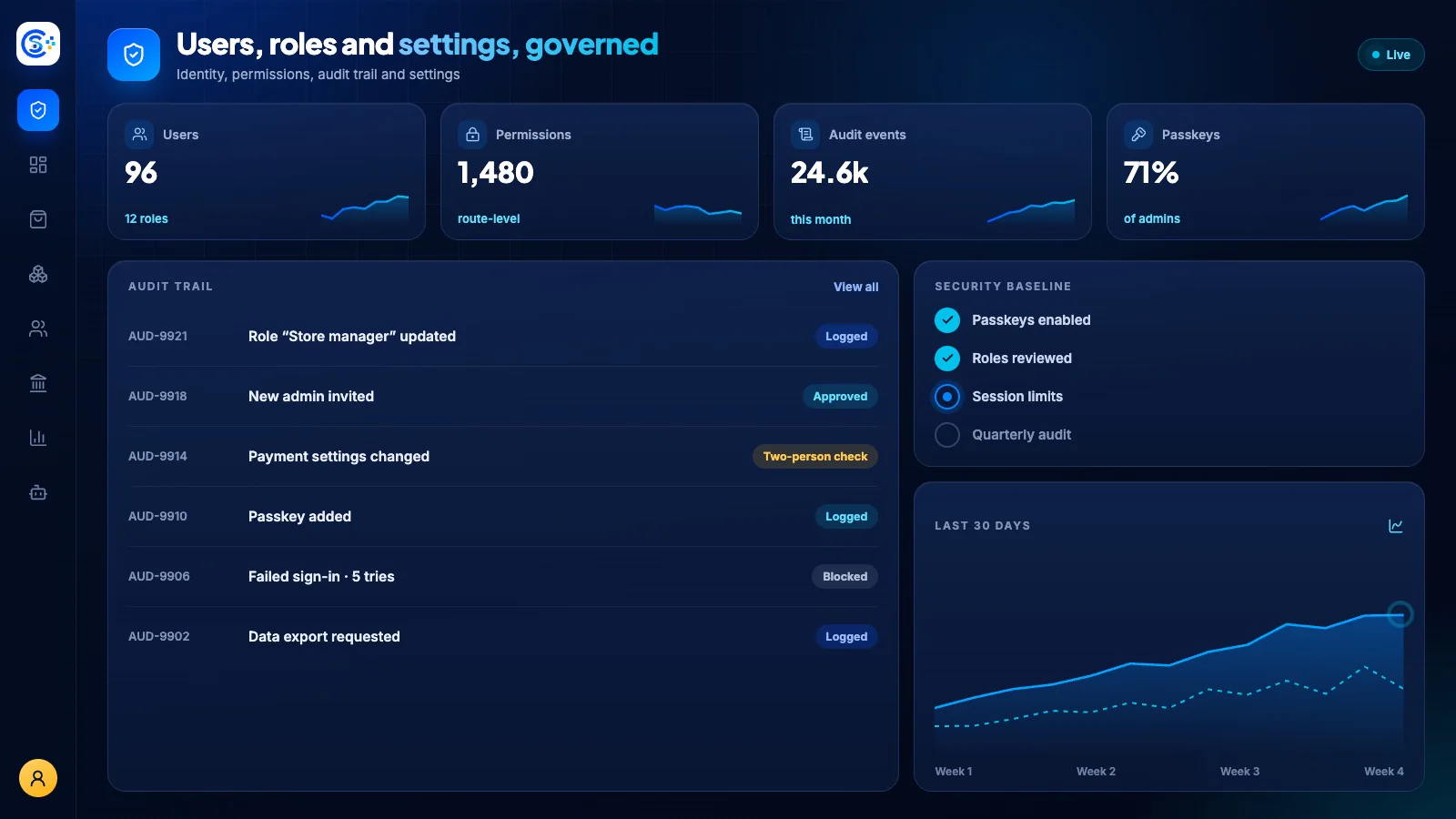
See Platform Kit in the Store Console admin.
Start with what you need
Run Platform Kit on your own server.
Start with this module, add the ones around it when you need them, and keep every record on your own server.